
Why Use Blister Card Packaging for Retail Success?
Introduction
Most retail packaging fails at one of three things: visibility, protection, or cost efficiency. Blister card packaging is one of the few formats that solves all three at once, which is why it has become a standard choice across global retail shelves.
The market reflects this shift. The global blister packaging market exceeded USD 30 billion in 2025 and is expected to approach USD 58 billion by 2034, growing at around 7.6% annually. Within this space, face-seal blister card packaging holds the dominant share at nearly 40%. The reason is simple—products that customers can see sell faster, and packaging that prevents loss protects margins.
At its core, a blister card combines a thermoformed PET or PVC cavity with a printed paperboard backing. One side showcases the product in full clarity, while the other delivers branding, instructions, and retail information. Together, they solve five critical retail problems: product damage, theft risk, low shelf impact, high packaging cost, and inconsistent presentation.
See-Through Selling — Why Visibility Drives Purchase
Walk into any retail store. Which items catch your eye first—the ones hidden in opaque boxes, or the ones you can clearly see?
Blister card packaging puts the product front and center. The transparent blister—thermoformed from high-strength PET or PVC—displays color, texture, and finish without distortion. At the point of purchase, this visibility matters: studies consistently show that clear packaging reduces perceived purchase risk, especially for small consumer goods where visual inspection influences buying decisions.
The backing card does more than support the blister. It offers:
- Structural stability for shelf and peg displays
- Hang holes for convenient merchandising
- Branding space for logos, instructions, and promotions
In short, a blister card gives you two marketing tools in one package: product visibility on the front and brand messaging on the back.
There’s also a psychological advantage. When shoppers can see exactly what they are buying, they ask fewer questions, reducing decision friction. This often leads to higher conversion rates, particularly for impulse items under $20.
Protection Without Hidden Surprises
Blister card packaging also excels in protecting products during shipping and handling. The thermoformed cavity matches the product’s exact shape, keeping it secure and preventing movement inside the package.
Compare with other formats:
- Folding cartons: products can shift and collide
- Polybags: products may crush or deform
- Blister cards: products stay perfectly in place
The PET or PVC blister material itself provides impact resistance, effectively preventing collision and extrusion damage, as confirmed by leading thermoforming equipment specifications.
The sliding blister design on the JY2006F from Xiamen Jiangxin improves usability further. Instead of tearing or cutting the package—a common source of frustration—the product slides out smoothly. Polished card edges prevent scratches or discomfort, ensuring both supply chain protection and an excellent customer experience.
Good design protects the product. Great design protects the customer. This is the kind of thoughtful engineering you expect from quality blister card packaging.
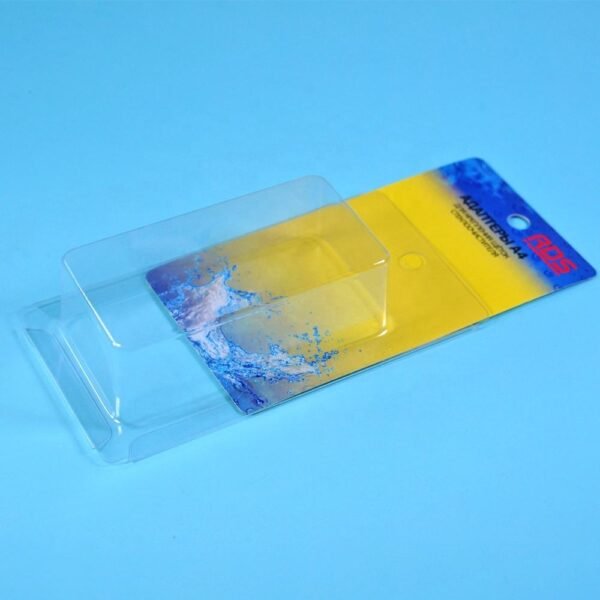
blister card packaging
Cost Comparison — Blister Cards vs. Folding Cartons
A common misconception is that blister card packaging is expensive. In reality, it can reduce costs significantly.
Cost benchmarking for small consumer electronics shows:
- Material: PET and PVC are commodity plastics and generally cheaper than thick paperboard
- Tooling: Thermoforming molds require upfront investment, but per-unit costs drop significantly at volume
- High-volume efficiency: For orders above 10,000 pieces, blister cards are typically 15–25% cheaper than folding cartons of equivalent size
By reducing material use, shipping weight, and storage space, blister cards often deliver the lowest total cost for high-volume retail SKUs—without sacrificing protection or visibility.
| Cost Factor | Blister Card Packaging | Folding Carton |
|---|---|---|
| Material cost per unit | Low (PET + thin paperboard) | Variable (paperboard prices fluctuate) |
| Tooling investment | Moderate (blister mold: 1,500–1,500–5,000) | Low (die-cutting only) |
| Weight per 1,000 units | 8–12 kg | 18–25 kg |
| Shipping efficiency | High (blister nest) | Moderate |
| Theft deterrence value | Built-in (tamper evidence) | None unless added |
| Typical MOQ | 5,000–10,000 units | 1,000–3,000 units |
When you factor in shipping weight, storage density, and material waste, blister card packaging often delivers the lowest total cost for high-volume retail SKUs.
Supplier lead times also affect total cost. For custom blister cards, lead times, including mold development and sample approval, average 15–25 days per the product specification page. That’s shorter than many custom folding carton lead times (often 6–8 weeks), which reduces inventory carrying costs and improves cash flow.
Theft Deterrence That Works Without Guards
Retail theft is a major challenge, with annual shrinkage losses reaching hundreds of billions globally. Small, easily pocketed items represent the largest share of these losses.
Blister card packaging provides inherent tamper evidence. Any attempt to remove the product leaves visible signs—torn paperboard or a broken heat seal—which alone deters casual shoplifters. In addition, the paperboard backing can accommodate a pre-applied EAS (Electronic Article Surveillance) tag, commonly used by major retailers to prevent theft.
Compared to plain boxes or polybags, blister cards raise the security barrier significantly:
- For retailers: fewer inventory write-offs
- For brands: products appear lower risk, improving shelf placement opportunities
Some designs even feature tear-resistant paperboard engineered to resist slashing, offering extra protection for high-value items like USB drives or SD cards. Across the board, blister card packaging delivers a security advantage that simpler formats cannot match.
Branding Space That Works Alongside the Product
Folding cartons provide multiple surfaces for branding, but the product remains hidden behind panels. Blister cards, on the other hand, give one large, uninterrupted card face, printed in full color, positioned directly next to the visible product.
This proximity strengthens brand recognition: customers see the product and the brand message simultaneously, creating a stronger associative memory than discovering the product after opening a box.
Blister card inserts are fully customizable:
- Colors, patterns, and graphics
- Text and instructions
- Finishing effects such as spot UV, embossing, or gloss/matte finishes
For multi-SKU brands, blister card packaging maintains a consistent shelf identity. Templates can be reused, only adjusting product-specific details and blister dimensions. The result: cohesive, professional presentation at a fraction of the cost of fully custom boxes for each SKU.
What Consumers Actually Want — Trends That Favor Blister Cards
Several current consumer trends align perfectly with blister card packaging:
- Transparency Preferences: Shoppers want to see what they are buying. Blister cards dominate categories such as electronics accessories, cosmetics, tools, and toys because visual inspection drives purchase confidence.
- Sustainability Expectations: Nearly two-thirds of consumers consider recyclability when choosing products. Innovations like recyclable PET or rPET blisters reduce carbon footprint by up to 47% compared to traditional PVC while maintaining durability and protection.
- Ease of Opening: Hard-to-open packaging frustrates consumers, leading to negative shopping experiences. Blister card packaging—especially modern slide-out designs—allows products to be removed smoothly without tearing, cutting, or damaging the package, ensuring a hassle-free experience and higher customer satisfaction.
- Responsible Manufacturing: Using rPET for blister components is gaining traction, cutting CO₂ emissions by roughly 50% versus virgin PET equivalents. For brands with sustainability goals, this helps reduce Scope 3 emissions meaningfully.
Blister card packaging meets both consumer expectations and retail requirements, making it a practical, forward-thinking solution for small- to medium-sized products.
| Sustainability Option | CO₂ Reduction vs. Virgin Material | Recyclability |
|---|---|---|
| Recyclable PET blister | Up to 47% lower carbon footprint | Full (mono-material PET) |
| rPET blister packaging | Approximately 50% CO₂ reduction | Full (through standard PET recycling) |
| Card-to-card fiber blister | Not specified | 100% recyclable in paperboard streams |
The Size and Customization Reality — What's Actually Possible
One of the most common questions about blister card packaging is whether it works for non-standard product shapes. The answer is almost always yes.
PVC and PET materials can be thermoformed into virtually any cavity shape, thickness, and size. Thickness options typically range from 0.3mm to 0.8mm, depending on the application and the level of protection required. The blister part is precisely blister-formed to fit the product contour closely, providing stable support and effective protection against collision and extrusion during transportation.
Customization extends to every element of the package:
Blister type: Face-seal (blister sealed directly to card), trapped blister (blister sandwiched between front and back cards), or slide-out designs.
Material: PVC, PET, PS, PP, or rPET variants.
Size and shape: Fully customizable to match product dimensions.
Card design and printing: Full-color UV printing, matte or glossy finishes, embossing, spot UV.
Sealing options: Heat seal, adhesive seal, or H-Loc trapped blister for tamper evidence.
Insert options: Folding inserts, instruction leaflets, or promotional cards.
The lead time for custom blister card packaging is another practical consideration. From initial design through mold development, sample approval, and production, the typical timeline averages 15–25 days. That’s a compressed timeline compared to many other custom packaging formats, which can take 6–8 weeks or longer. For seasonal products or promotional launches, those weeks matter.
Blister Cards vs. Clamshells — Which One Wins at Retail?
This is a common point of confusion. Clamshell packaging consists of two plastic halves hinged together, fully encasing the product. Blister card packaging uses a plastic front cavity sealed to a paperboard back.
Both have their place, but for most retail applications, blister cards offer a better balance of cost, sustainability, and customer experience.
Blister cards use significantly less plastic than clamshells, making them lighter, cheaper, and more environmentally friendly. The paperboard back is recyclable in standard paper streams, and the plastic blister can be detached for separate recycling—a design approach that improves overall recyclability compared to clamshells’ all-plastic construction.
Clamshells offer greater structural rigidity and are better suited for heavy or multi-part products that require protection from all sides. But for the vast majority of small- to medium-sized consumer goods—electronics, hardware, cosmetics, toys, crafts—the blister card is the more practical choice.
Where clamshells consistently underperform is in ease of opening. Consumer studies have found that people rank clamshells as the hardest packaging format to open, with many reporting frustration and even injuries. Blister cards, particularly slide-out designs, avoid the scissors-and-cursing experience entirely.
| Feature | Blister Card | Clamshell |
|---|---|---|
| Plastic usage: | Low to moderate | High |
| Paperboard component: | Yes (backing card) | No (all plastic) |
| Ease of opening: | Good to excellent | Poor (notorious for difficulty) |
| Structural protection: | Good for single items | Excellent for heavy/multi-part items |
| Theft deterrence: | Tamper-evident seal | Moderate (thick plastic) |
| Sustainability profile: | Better (mixed materials, less plastic) | Worse (all plastic, harder to recycle) |
| Typical unit cost: | Lower | Higher |
Real-World Applications — Where Blister Card Packaging Actually Moves Product
Here’s where the rubber meets the road. Blister card packaging isn’t a theoretical best practice—it’s already the standard in several high-volume retail categories.
Hardware and fasteners: Nails, screws, wall anchors, drill bits, and small tools are almost always sold on blister cards. Why? Because buyers need to see the product to assess size, thread type, and quality. A cardboard box conceals those details; a blister card puts them on full display.
Consumer electronics: USB cables, chargers, adapters, SD cards, and earbuds. These products have a high theft risk and rely heavily on visual appeal. Blister cards solve both problems simultaneously.
Cosmetics and personal care: Lipsticks, eyeshadow palettes, nail files, and grooming tools. The backing card provides ample space for shade names, usage instructions, and ingredient lists, while the blister window shows the actual product color and finish.
DIY and home improvement: Specialty light bulbs, cabinet pulls, switch plates, and small replacement parts. Customers need to see the physical item to confirm fit and style. Blister cards deliver that visibility while keeping small parts organized and secure.
Toys and crafts: Collectible figures, modeling supplies, sewing needles, and small craft kits. Blister cards deter theft of small, high-value items while allowing kids (and parents) to see exactly what’s inside before buying.
Pharmaceuticals and healthcare: Over-the-counter medications, first-aid supplies, and medical devices. While pharmaceutical blister cards often have different regulatory requirements, the same protective and visible qualities apply.
These categories share a common requirement: customers need to see the product before buying, and retailers need packaging that deters theft and survives shipping. Blister card packaging checks both boxes.
FAQ
Q1: What materials are used to make blister card packaging?
High-strength PVC, PET, or rPET for the blister, paired with paperboard for the card back. Thicknesses typically range from 0.3mm to 0.8mm, depending on product protection requirements.
Q2: Is blister card packaging recyclable?
Yes. The paperboard card is widely recyclable. The plastic blister—particularly PET and rPET variants—can be recycled separately. Mono-material PET blister packs designed for recyclability are increasingly available from major manufacturers.
Q3: What’s the typical minimum order quantity for custom blister cards?
MOQs vary by manufacturer. Some suppliers offer custom blister cards starting at 5,000 units, while others require 10,000–25,000 units, depending on tooling complexity. For blister card packaging, always ask for the MOQ that fits your launch volume.
Q4: Can blister card packaging be used for heavy products?
For products over approximately 2–3 pounds, clamshell packaging or folding cartons with inserts may be more appropriate. Blister cards excel with small- to medium-weight consumer goods.
Q5: How long does custom blister card production take?
From design through tooling, sampling, and full production, lead times typically average 15–25 days for standard custom orders, depending on complexity and seasonal factory schedules.
Conclusion
Blister card packaging meets consumer needs for product visibility and easy access while providing retailers with theft deterrence, cost efficiency, and reliable supply chain performance. It is widely used across hardware, electronics, cosmetics, and toys.
The blister packaging market is growing at 7.6% annually, with blister cards holding nearly 40% of the share. Increasing demand for recyclable materials confirms its relevance for modern retail.
Sliding blister designs enhance usability and protection, allowing smooth product removal and a secure fit. We offer full customization with advanced thermoforming and printing capabilities.
For products requiring shelf-ready visibility and protection, blister card packaging is an effective solution. Contact Xiamen Jiangxin Plastic Products with product dimensions, MOQ, and material preferences to receive design proposals in 3–5 days and samples in 2–3 weeks.
Related Products
Related Articles
Stay Updated on Packaging Trends
Get monthly packaging trends, new product releases and industry tips. No spam, unsubscribe anytime.