
Plastic Clamshell Packaging vs Plastic Blister Packaging
The Ultimate Comparison Guide
As a business owner choosing packaging for your products, you’ve likely encountered two popular transparent options: plastic clamshell packaging and plastic blister packaging. While they may seem similar at first glance, these two packaging solutions serve distinct purposes and offer different advantages.
In this comprehensive guide, we’ll break down the key differences, applications, and benefits of each packaging type to help you make an informed decision for your specific needs.
。
1. Structural Design: The Fundamental Difference
Plastic Clamshell Packaging:
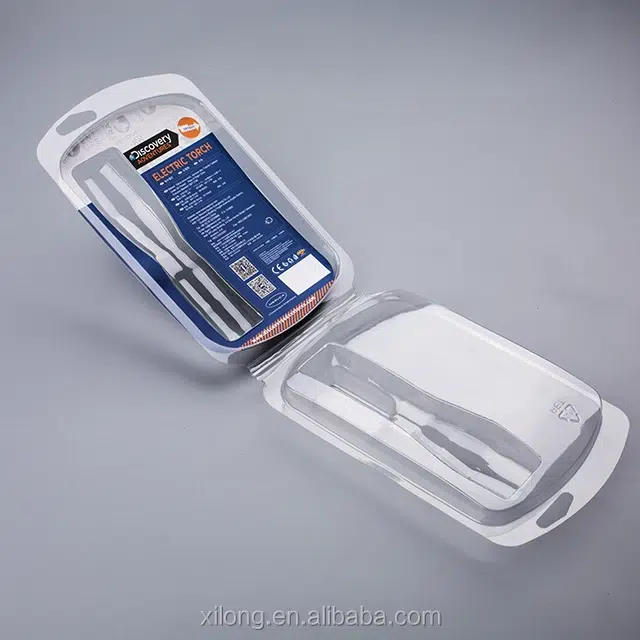
Consists of two identical or complementary hinged halves
Forms a complete enclosure around the product
Typically sealed along multiple edges using heat welding, ultrasonic sealing, or adhesives
Often features a built-in hanging tab for retail display
Creates a self-contained “shell” that fully encases the product
Plastic Blister Packaging:
Features a single plastic cavity (the blister) mounted on a rigid backing card
The blister is vacuum-formed to fit the product’s contours
Secured to a paperboard or cardboard backing using heat-sealing or adhesives
Creates a display window while utilizing printed cardboard for information and branding


2. Material Composition and Manufacturing
Clamshell Packaging Materials:
Blister component typically uses PVC, PET, or PP
Backing card made from various paperboard stocks
Thinner plastic gauge sufficient for the blister cavity
Allows for combination of plastic clarity and printed information
Also manufactured using thermoforming for the blister component
Blister Packaging Materials:
Blister component typically uses PVC, PET, or PP
Backing card made from various paperboard stocks
Thinner plastic gauge sufficient for the blister cavity
Allows for combination of plastic clarity and printed information
Also manufactured using thermoforming for the blister component
3. Product Protection and Security Features
Clamshell Packaging Protection:
Superior physical protection from crushing and impact
Complete environmental sealing against dust and moisture
Excellent tamper evidence – any access attempt is visible
Better for heavier or bulkier items
Resealable options available for certain configurations
Blister Packaging Protection:
Good product security against theft and handling
Adequate protection for lightweight items
Tamper-evident when properly sealed
Less suitable for heavy or fragile items requiring full encapsulation
Single-use design typically not resealable
4. Retail and Marketing Advantages
Clamshell Packaging Marketing Benefits:
360-degree product visibility from all angles
Maximum product exposure without obstructions
Premium appearance when using high-clarity materials
Space for branding on both halves of the package
Excellent for products where full inspection is important
Blister Packaging Marketing Benefits:
Large printable area on the backing card for branding
Cost-effective combination of plastic and cardboard
Ideal for informational and instructional content
Space for barcodes, compliance information, and features
Slim profile for efficient shelf space utilization



5. Cost Considerations and Economics
Clamshell Packaging Costs:
Higher material costs due to more plastic usage
Better for medium to high-value products
Justifiable cost for products requiring maximum protection
Economies of scale achievable in high-volume production
Lower damage rates can offset higher packaging costs
Blister Packaging Costs:
Lower material costs through cardboard integration
Excellent for low to medium-value products
Cost-effective for mass-market consumer goods
Reduced shipping weight can lower logistics costs
Ideal for high-volume, low-margin products
6. Sustainability and Environmental Impact
Clamshell Packaging Sustainability:
Recyclable options available (PET, RPET)
Higher plastic content may concern eco-conscious consumers
Potential for reuse by consumers for storage
Lightweighting opportunities through material engineering
Compatible with take-back programs
Blister Packaging Sustainability:
Less plastic usage per package
Cardboard component is widely recyclable
Separation required for proper recycling
Consumer confusion about disposal common
Opportunities for FSC-certified paperboard
Related projects
- Blister & Clamshell
- Blister & Clamshell